
If It Lives In Your Head, It Isn't A System
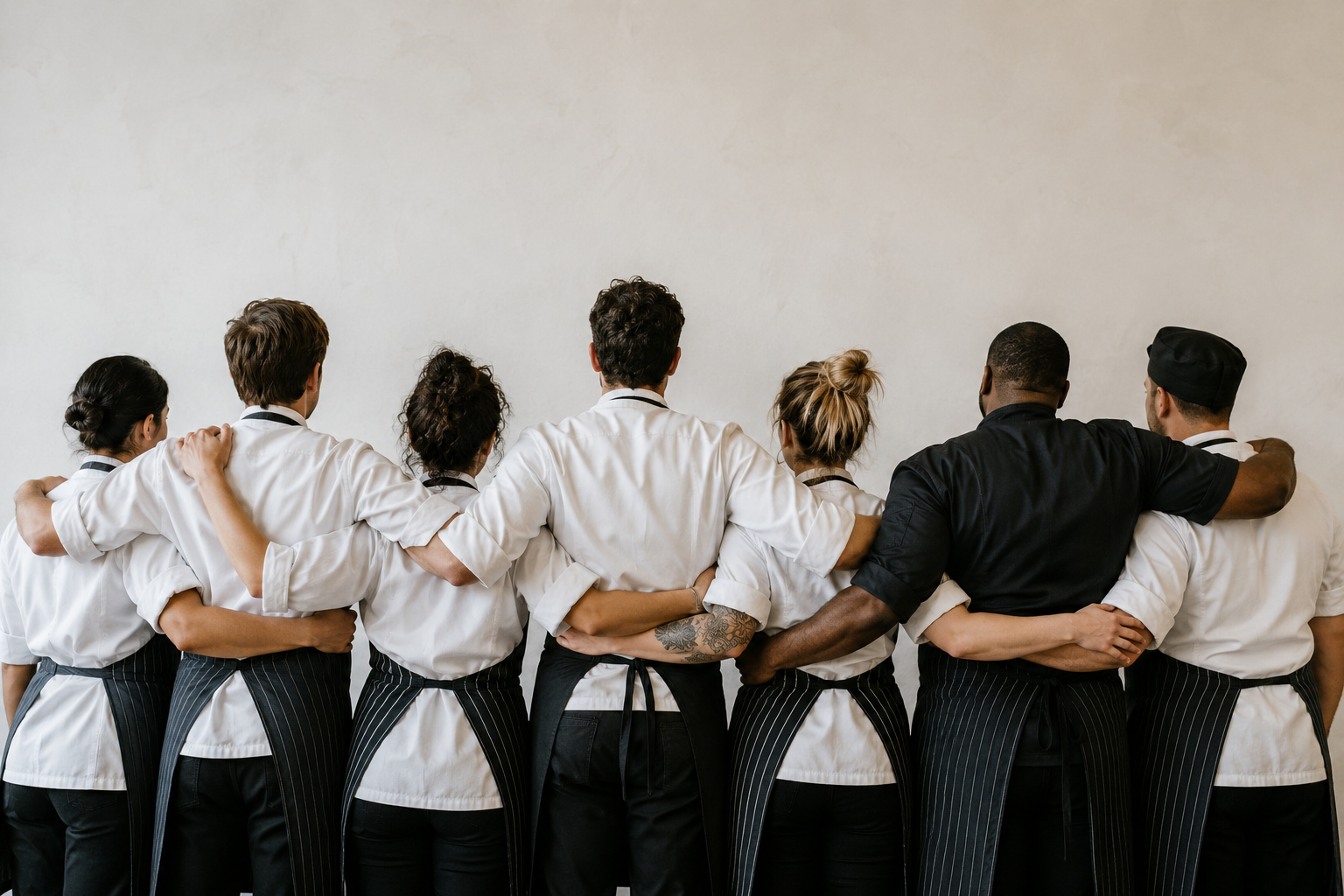
A professional kitchen team standing together, representing shared knowledge, mentorship, and the operational culture required to build restaurants that thrive beyond opening day.
Smoke & Stone Journal
If It Lives In Your Head, It Isn't A System
One of the biggest mistakes I see in hospitality has very little to do with food.
It isn't the menu.
It isn't the equipment.
It isn't even the team.
It's knowledge and how this knowledge is shared.
Earlier in the Smoke & Stone Journal, I've explored concept development, kitchen structure, team alignment, prep systems, and service flow. All of those things matter. But eventually every opening reaches a point where the operation has to stand on its own two feet.
Eventually every opening reaches a point where the operation has to stand on its own two feet. The excitement of opening week fades, people settle into routines, and the question becomes whether the standards that were built during the opening process can actually survive.
Over the years I've walked into countless kitchens that looked completely different on the surface. Different concepts, different teams, different cuisines, different owners. Yet they all shared the same weakness.
Everything lived in one person's head.
At first it rarely looks like a problem. In fact, it often looks like the opposite. Every operation seems to have that person. The chef who knows every recipe without looking. The manager who knows exactly what to order and when. The person who can answer every question before anyone else has even finished asking it.
People admire them because they make things work.
The trouble is that eventually you start to realise they aren't supporting the operation.
They are the operation.
Looking back, I can think of more than one opening where cracks started to appear the moment the person holding everything together wasn't there. Sometimes it was something as simple as somebody being off sick for a few days. Other times it was a chef moving on after months of carrying knowledge that had never really been shared. What struck me wasn't that people struggled without them. It was that nobody had realised how dependent the operation had become until that moment arrived.
I've seen kitchens where the answer to almost every question was simply, "Ask Dave."
Nobody knew where certain supplier information was because Dave knew. Nobody knew prep quantities because Dave knew. Nobody knew the setup because Dave knew. Nobody knew the allergens because Dave knew.
We've all worked somewhere like that.
At first, it doesn't seem like a problem. Things move quickly because the answers are always available. But over time, questions stop being shared and understanding stops being developed. The team becomes reliant rather than capable.
Everything works perfectly right up until the moment Dave isn't there.
That's usually when the panic starts.
Suddenly the team isn't sure how much to prep. Ordering takes twice as long. Standards become inconsistent. Small problems that were previously invisible start appearing everywhere. Not because people don't care or aren't capable, but because the operation was built around memory instead of structure.
I think this happens because hospitality has always had a habit of celebrating individuals. We love stories about great chefs, great managers, and great operators. What we don't talk about enough is what happens when those people leave the room.
A truly strong operation shouldn't depend on one person carrying everything on their shoulders.
It should be able to survive without them.
That doesn't mean creating endless folders full of paperwork that nobody ever reads. Most kitchens already have enough paperwork. I've seen recipe books that bear no resemblance to what actually happens during service, allergen folders that haven't been updated in years, and procedures that were written for an opening and then quietly forgotten about.
The goal isn't documentation.
The goal is shared understanding.
There is a huge difference.
One creates paperwork.
The other creates consistency.
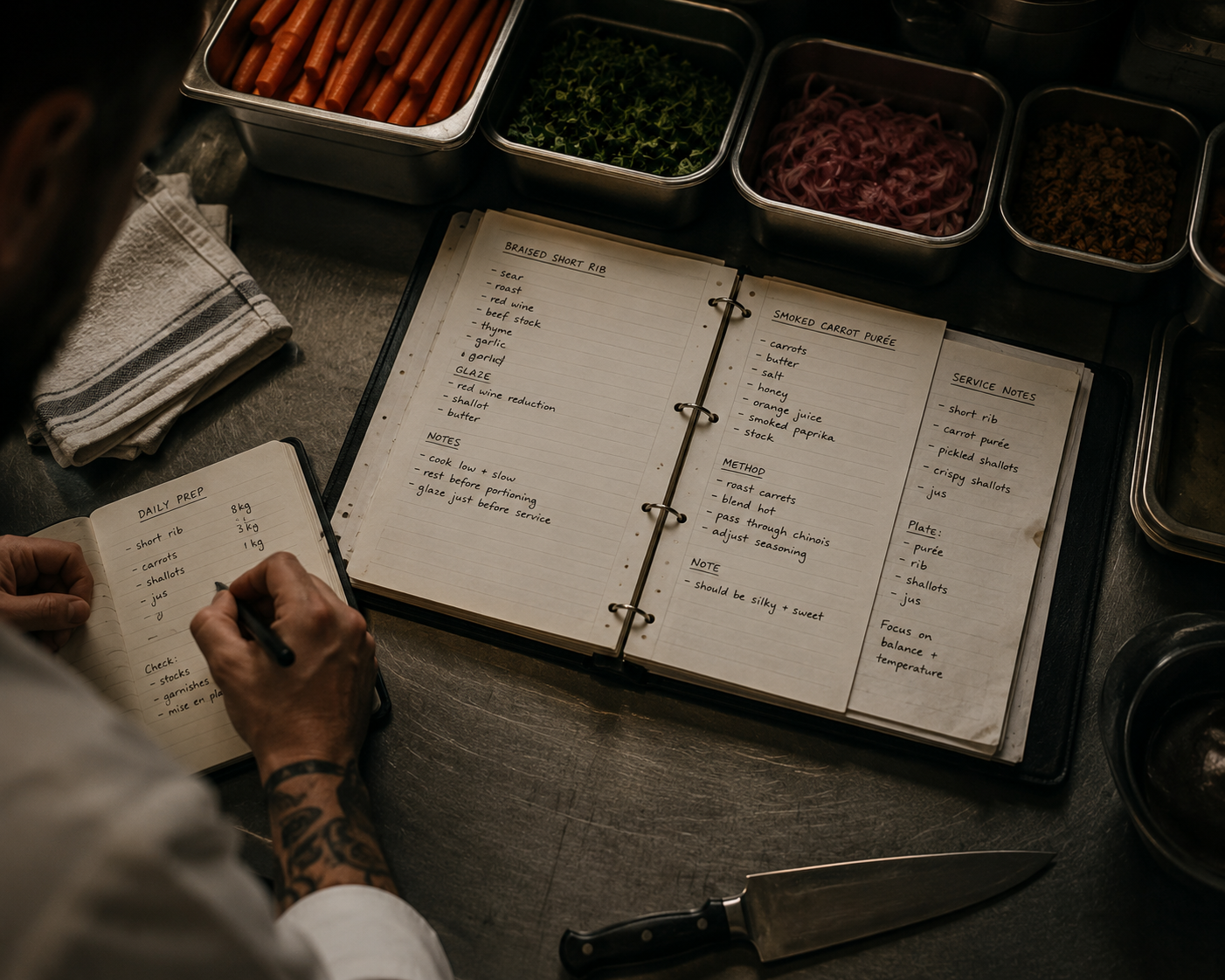
Handwritten recipe notes and prep systems play a vital role in transforming knowledge into shared understanding. This image reflects the operational foundations that help restaurant teams maintain consistency under pressure.
During an opening, there is often somebody available to answer every question. The chef is there. The project team is there. Managers are present. Decisions are made quickly because everyone is close to the project. A few weeks later, that changes. The operation starts behaving like a real business rather than an opening project, and that is usually where weaknesses begin to appear.
When somebody joins a team, they should be able to understand how the kitchen works without needing somebody to stand beside them for three weeks explaining every little detail. They should be able to find information, understand expectations, and see what good looks like. The operation should guide them.
The best kitchens I've worked in all had this quality. Not because they were obsessed with systems or administration, but because they respected people's time. Information was available. Standards were visible. Expectations were clear.
One area where this becomes particularly important is allergens. There are certain things in hospitality where assumptions simply don't belong. During a busy service, confidence comes from knowing the answer, not hoping you remember it correctly. Guests don't care whether the information was in somebody's head five minutes ago. They care that the answer is accurate when they need it.
As operations grow, these things become even more important. More people join. More covers are served. More complexity appears. What worked when there were three people in the kitchen suddenly stops working when there are fifteen. Knowledge has to move from individuals into the operation itself.
Looking back at most successful openings I've been involved in, the teams that settled quickest were rarely the most experienced. They were the teams that understood the standards, knew where to find information, and could make decisions without constantly relying on somebody else. The opening had already been converted into a working system.
If everything lives in one person's head, it isn't a system.
It's a dependency.
Eventually every operation discovers whether it built systems or heroes. The strongest openings I've been part of weren't the ones with the loudest personalities or the most experienced individuals. They were the ones where information was shared, standards were understood, and people felt confident stepping into responsibility because the operation had been designed that way.
As openings settle into everyday reality, this becomes increasingly important. People leave. New people arrive. Teams evolve. What determines whether the business continues to hold isn't what one person remembers.
It's what the operation has managed to keep.
Strong openings don't just build kitchens.
They build understanding.
And that's often the difference between a restaurant that survives opening week and one that continues to thrive long after the excitement has faded.
The Takeaway
If everything lives in one person's head, it isn't a system.
Strong openings don't depend on heroes. They create shared understanding, clear standards, and operations capable of surviving long after the excitement of opening day has passed.
Continue Reading
If you enjoyed this article, you may also find these useful:
Smoke & Stone
At Smoke & Stone, we believe the strongest operations aren't built through luck or individual brilliance. They are built through clarity, structure, and teams that understand how to work together under pressure.
Whether supporting a new opening, refining existing systems, or helping a team regain control,
our approach remains the same: build foundations that last.
Because opening day is only the beginning.
Ready to strengthen your operation?
Smoke & Stone supports restaurants, hotels, and food projects through:
Concept development
Kitchen systems and workflow design
Pre-opening delivery and operational planning
Team alignment and leadership support
Ongoing operational consultancy
If you're looking for experienced support, we'd love to hear more about your project.