
A Finished Menu Isn't A Ready Menu
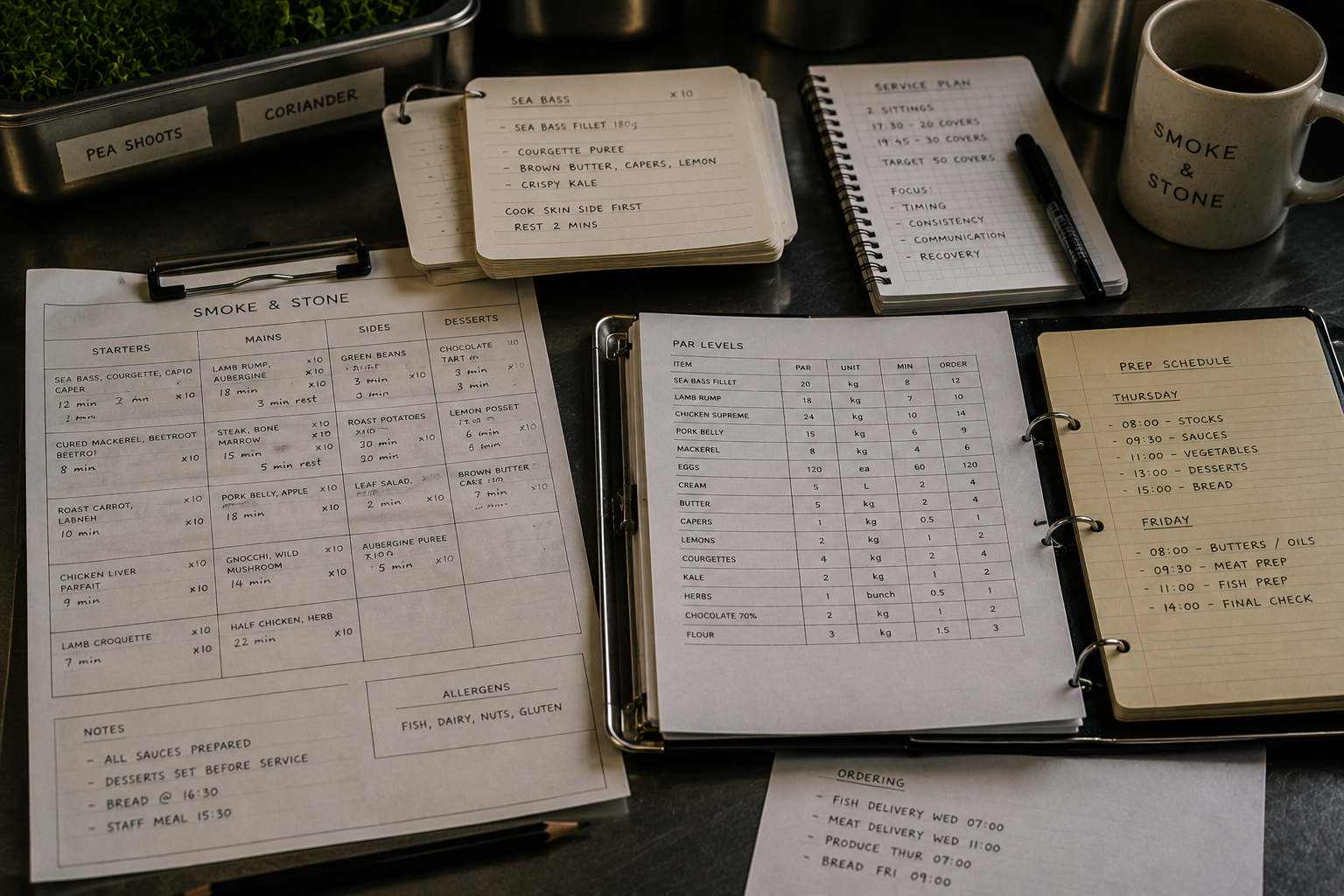
Chef menu development notes, prep plans and operational restaurant planning before opening.
One of the first things I look at during an opening is the menu.
Not because I'm judging the food.
I'm judging the operation.
After enough openings, you stop looking at dishes individually and start looking at what they collectively demand from the kitchen. Sometimes it's difficult to explain exactly why, but instinct tells you when something might become a problem.
The important word there is might.
One thing experience has taught me is not to write anything off too quickly.
I can look at a menu and feel that something may be challenging, but I never judge it in isolation. Before forming an opinion, I want to see the kitchen. I want to see the storage. I want to see the equipment. I want to understand the team, the suppliers, the prep areas, and the overall rhythm of the operation.
Only then do you start to see where the gaps are.
Menus don't succeed or fail on paper. They succeed or fail inside the environment built to support them.
The longer I spend in an operation, the clearer those patterns become. After a few services, you start to see where pressure builds, where systems are missing, and where expectations no longer match reality.
That is where the real work begins.
Earlier in the Smoke & Stone Journal, I've written about concept development, kitchen structure, prep systems, service flow, and knowledge transfer. Those elements don't exist independently of one another. The menu sits at the centre of all of them.
A menu influences the suppliers you rely on, the prep systems you build, the service flow you create, the training your team requires, and ultimately the experience your guests receive.
When menus fail, it is rarely because of a single dish.
More often, it is because the menu demands more from the operation than the operation can realistically provide.
That is why I believe one of the biggest mistakes made during openings is treating a finished menu as a ready menu.
The two are not the same.
Over the years I've seen menus that looked fantastic on paper. Beautiful descriptions. Interesting ingredients. Plenty of technique. The problem was that nobody had really considered what would happen when eighty guests arrived within the same hour.
The food might be excellent.
The problem is that service hasn't happened yet.
One of the first things I notice is when a menu feels like it has been designed to be different rather than designed to be good. Strange combinations, unnecessary complexity, ingredients that don't seem to have a purpose beyond creating intrigue.
Sometimes the best dishes are the ones that do the least.
I've always been a believer in allowing ingredients to speak for themselves. I am very much a one-main-ingredient kind of person. Take a great ingredient and showcase it properly. Cook it. Marinate it. Pickle it. Dry it. Respect it. Then support it with one or two flavours that complement the cooking style and natural pairing.
Not every plate needs four garnishes, five sauces, edible flowers, powders, and a handful of micro cress.
Guests rarely remember the garnish.
They remember how the dish made them feel.
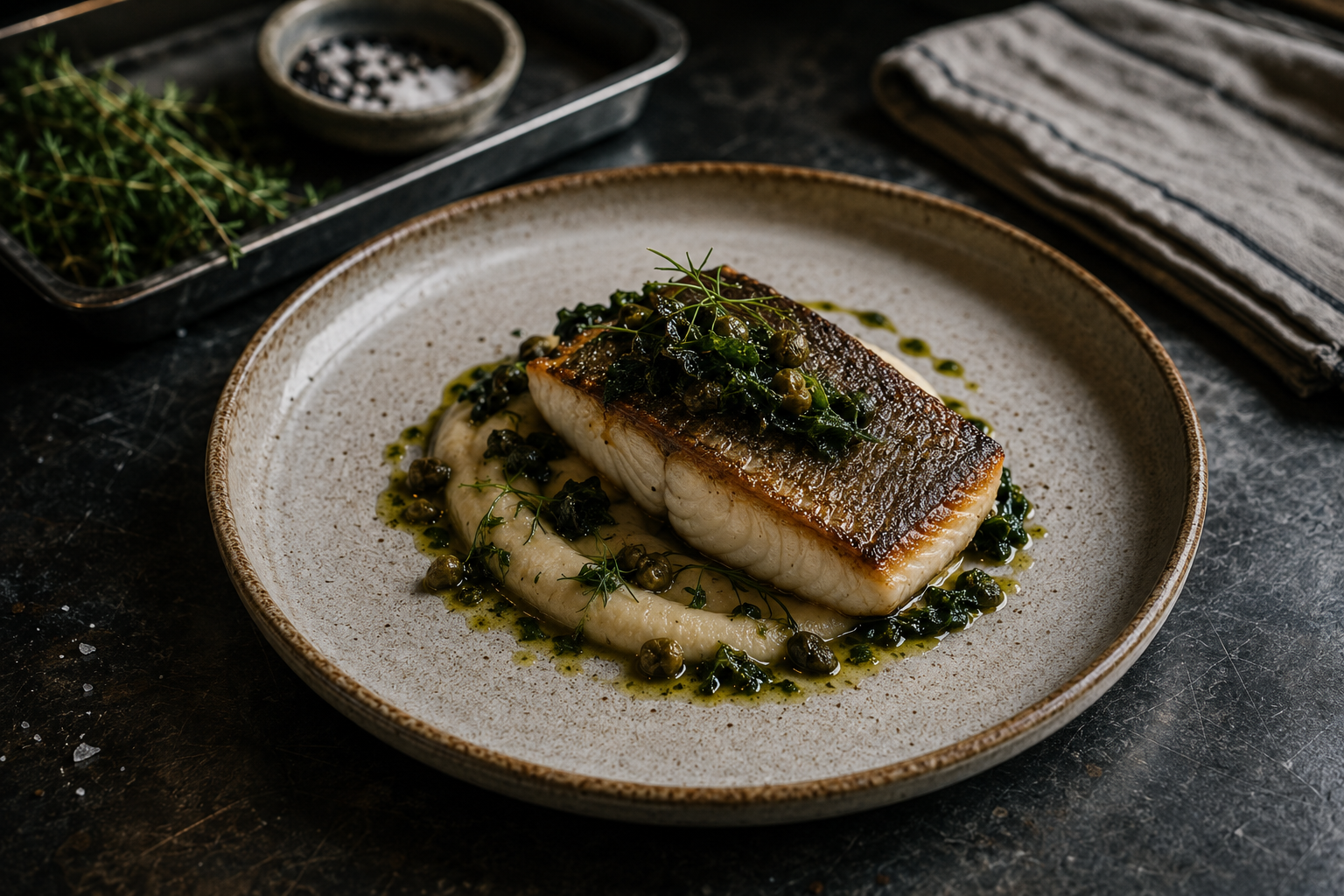
Some of the most successful dishes I've encountered weren't the most complicated. In fact, many of them looked surprisingly simple. Yet somehow they were the dishes guests returned for again and again.
The opposite is also true.
I've seen dishes that pulled out every stop imaginable, but ultimately failed to create the same connection.
One of the most memorable examples for me wasn't a plated dish at all. It was the famous roast beef carving trolley at Simpsons in the Strand. People remember it because of the experience. The theatre. The anticipation. The interaction.
Great dishes are memorable.
That doesn't necessarily mean they are complicated.
The strongest menus aren't always the simplest.
One of the biggest misconceptions in hospitality is that complexity is automatically bad.
It isn't.
I've worked with incredibly simple concepts that struggled and highly detailed operations that thrived.
The difference wasn't complexity.
The difference was alignment.
The menu matched the team.
The suppliers matched the menu.
The systems matched the workload.
The operation understood what it was trying to achieve.
Menu design and staffing are inseparable.
One of the biggest mistakes operators make is designing a menu for the team they wish they had rather than the team they actually have. I've seen situations where one person was expected to run a busy small-plates operation for months with little professional support. The menu itself wasn't necessarily the problem.
The expectation was.
Every decision on a menu creates work somewhere else in the operation.
Every garnish needs preparing.
Every sauce needs making.
Every component needs storing.
Every dish needs executing.
At some point the workload has to match reality.
I remember working on the relaunch of Simpsons in the Strand where elements of the menu were deliberately introduced gradually rather than all at once. Not because the food wasn't ready, but because the operation needed time to find its rhythm.
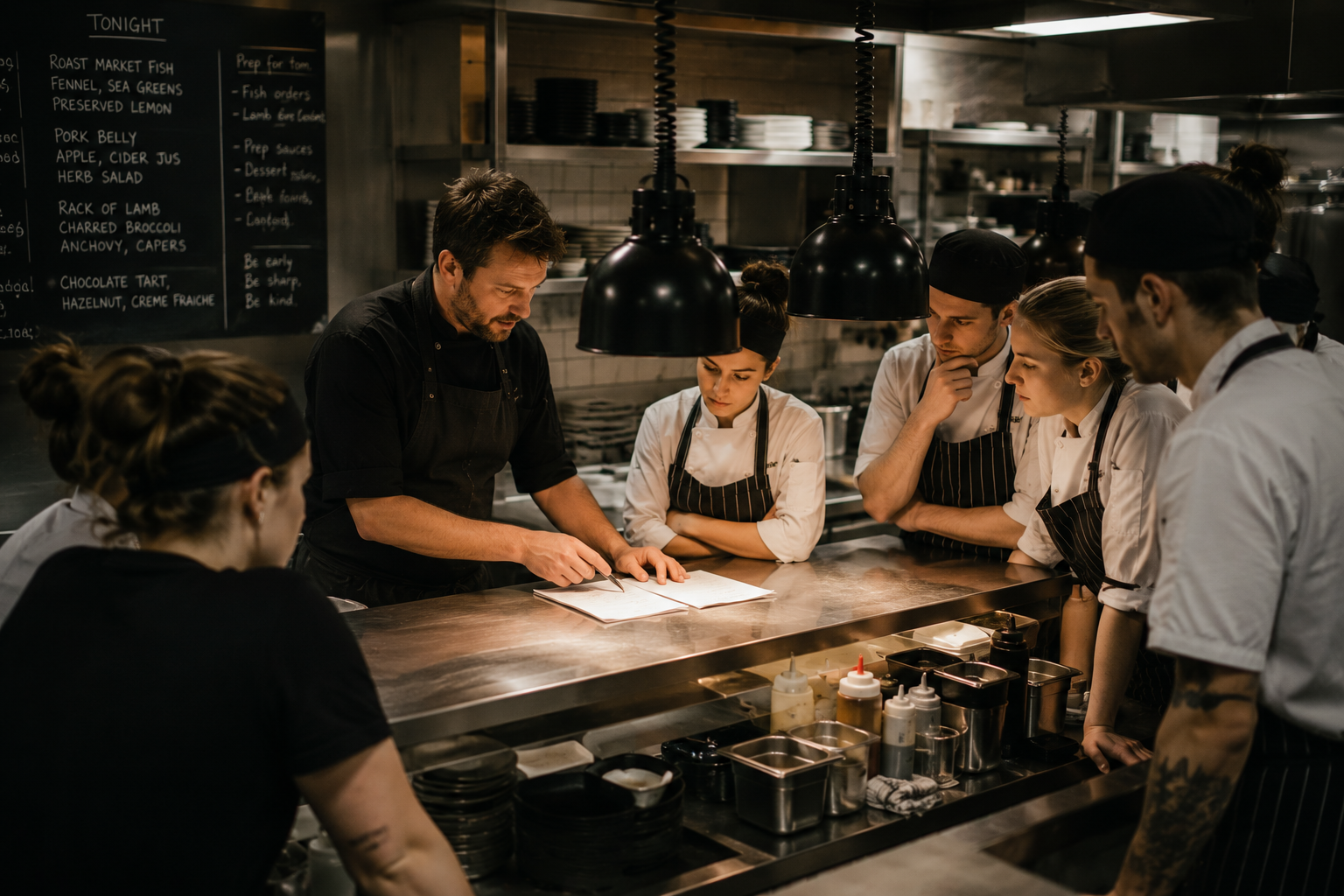
Simple ingredient-led restaurant dish demonstrating menu restraint and culinary confidence.
The concept involved a balance of traditional carving trolleys, à la carte service, tableside elements, and highly skilled hospitality. Rather than overwhelming the team from day one, certain elements were phased in as confidence and consistency developed.
Could we have launched everything immediately? Probably. But openings aren't won by seeing how much complexity an operation can survive. They're won by creating an environment where teams can succeed.
The team responded brilliantly because the pressure was manageable. Confidence grew. Standards improved. Additional layers were added once the foundations were already stable.
That lesson has stayed with me.
The strongest menus are rarely the ones that try to do everything.
They're the ones that fit the operation built to deliver them.
One of the easiest traps for chefs to fall into is becoming emotionally attached to the first version of a menu.
In reality, menus should evolve.
Guest behaviour changes.
Teams change.
Suppliers change.
What works on paper may not work in service.
The best operators aren't the ones who refuse to adapt.
They're the ones who recognise when adaptation is necessary.
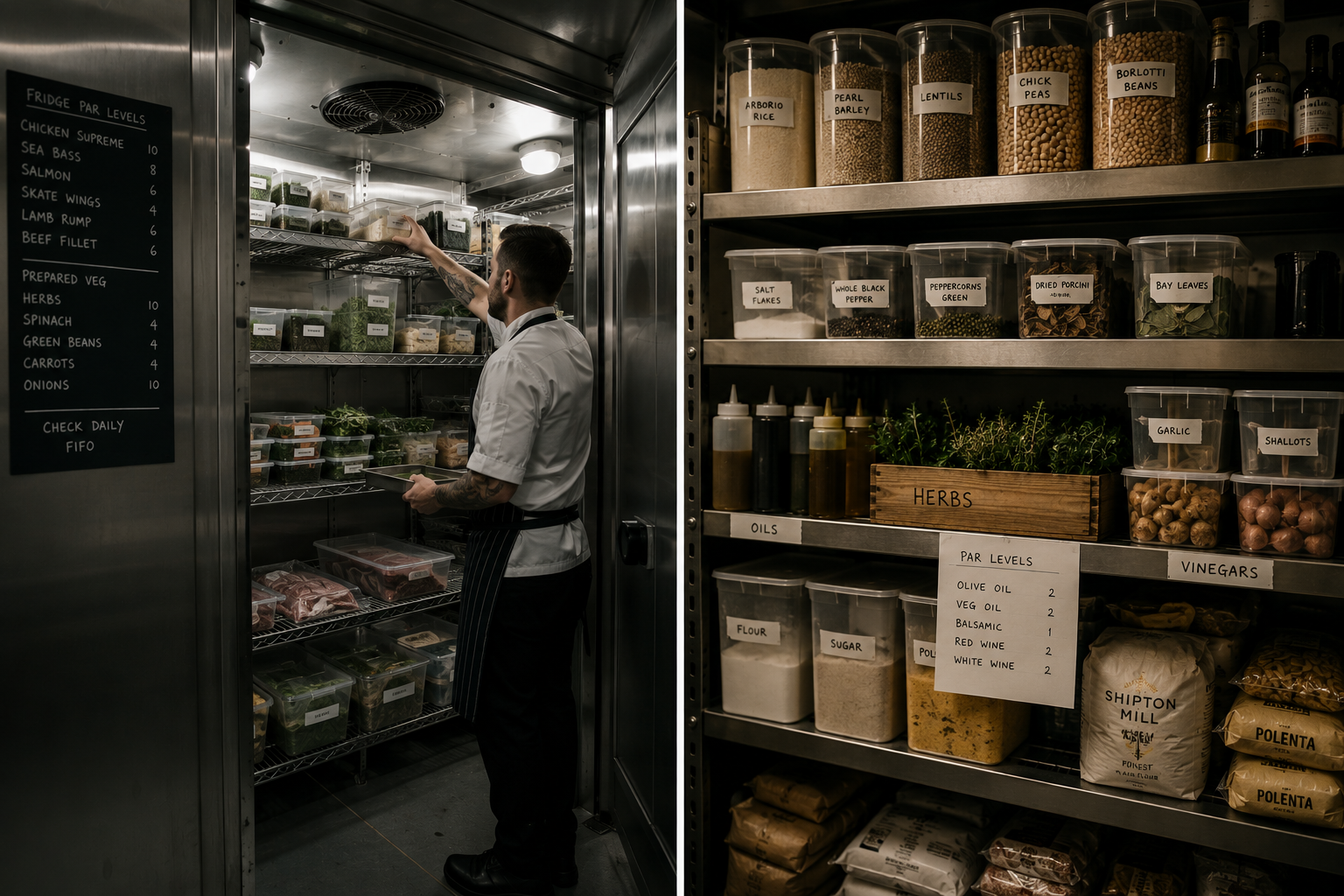
Organised restaurant storage systems, par levels and inventory management supporting operational consistency.
The same principle applies to suppliers.
Many operators focus heavily on food cost and procurement but overlook resilience. The question isn't whether something will go wrong.
The following points need to be planned for a solutions need to be available.
Suppliers fail.
Deliveries arrive late.
Technology breaks.
Orders get missed.
Products disappear.
What matters is what happens next.
Strong operations build contingency into the system. They have alternatives. They understand lead times. They understand ordering cycles. They know which products are critical and which can be adapted.
The menu needs to be capable of surviving reality.
One of the most enjoyable menus I've worked with was in a small tapas restaurant. The menu evolved constantly and gave us access to an incredible range of regional products. We were able to create internationally inspired dishes while remaining rooted in local ingredients and suppliers.
What made it successful wasn't the number of dishes.
It wasn't the complexity and it wasn't the creativity.
It was the alignment between the concept, the suppliers, the team, and the guest expectations which means the menu isnt fighting the operation, it was supported by it.
That made all the difference because the purpose of a menu is actually quite simple. Its there to communicate clearly to the guest what they are about to experience.That's it!!
Not to showcase every technique you know.
Not to prove how creative you are.
Not to demonstrate how many ingredients you can fit onto a plate.
A menu should help guests make a decision and help the kitchen deliver on that promise.
When those two things align, good things tend to happen.
The Takeaway
A menu doesn't need to be simple.
It doesn't need to be complicated.
It needs to fit the operation built to deliver it.
Because a finished menu isn't a ready menu.
A ready menu is one that survives reality.
Continue Reading other Smoke & Stone Journals Below
The Restaurant Pre-Opening Breakdown
Kitchen, Team & Prep: What Actually Holds Under Pressure
Service Flow, The Pass, and Where Control Is Won or Lost
If It Lives In Your Head, It Isn't A System
About Smoke & Stone
Smoke & Stone helps restaurants, hotels, and hospitality businesses transform operational challenges into stable, profitable, and scalable operations.
From concept development and pre-openings to kitchen restructures and interim leadership, we build the systems, standards, and team performance needed to deliver consistent results long after the initial project is complete.
Because successful hospitality businesses are not built on opening days. They are built on what happens every day afterwards.