
Service Flow, The Pass, and Where Control Is Won or Lost
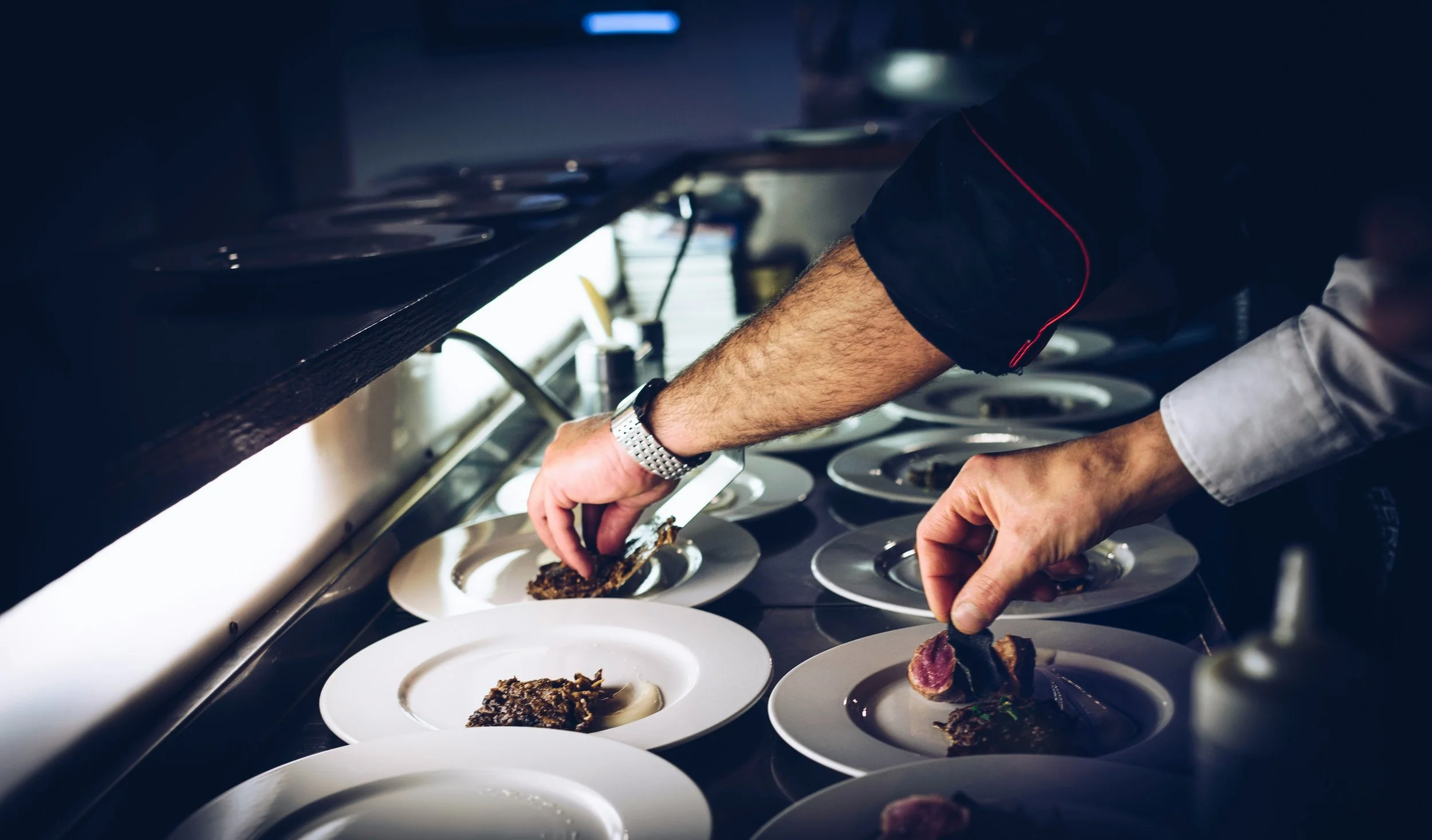
Chef plating dishes at a restaurant pass during live service, representing kitchen flow, timing, and operational control.
Smoke & Stone Journal
Week 3: Service Flow, The Pass, and Where Control Is Won or Lost
Restaurant service flow, pass control, and the systems that determine whether operations hold under pressure.
Following on from the earlier stages outlined in the Restaurant Pre-Opening Checklist, including concept clarity, menu readiness, kitchen structure, team alignment, and prep systems, we now arrive at the point where everything is tested properly: service. This is where ideas meet volume, where planning meets pace, and where confidence either settles the operation or disappears very quickly. Many openings can feel ready in the calm of the morning. The kitchen is clean, the prep is complete, uniforms are pressed, and energy is high. Then the first rush arrives, and with it comes the truth of whether the operation has really been built to hold.
Why The Pass Matters
The pass is often misunderstood by those outside the kitchen. It is not simply a counter where plates are handed over. It is the control point of the entire service. It sets rhythm, protects standards, manages timing, and absorbs pressure before it spreads through the room. In strong operations, the pass creates calm. In weaker ones, it becomes the place where confusion gathers. The difference is rarely dramatic at first. It usually begins in small moments that are either handled well or allowed to grow.
You can normally recognise a well-run service within minutes. There is a certain composure to it. Orders are called clearly, sections understand priorities, and communication happens early rather than too late. Plates move with purpose, adjustments are made quietly, and the team works with a shared sense of tempo. Good control often looks understated from the outside. There may be pace, but there is no panic. There may be pressure, but there is no loss of shape.
Where Service Begins To Break
When service begins to break, it usually does so in predictable ways. Too many orders are fired too early, sections stop speaking to each other, tickets begin to stack without decisions being made, and the front and back of house start operating at different speeds. Standards begin to slip in the name of urgency, while urgency itself solves very little. Once a kitchen becomes reactive, labour feels heavier, mistakes multiply, and morale can fall quickly. What looked manageable fifteen minutes earlier suddenly feels far more difficult than it needed to be.
What Strong Kitchens Understand
One of the most overlooked qualities in a strong kitchen is timing. Many people confuse timing with speed, but they are not the same thing. Almost any team can move quickly for ten minutes. Far fewer can pace themselves intelligently across an entire service. Strong teams know when to push, when to hold, how to sequence tables properly, and how to recover from setbacks without losing the board. They protect weaker sections before they collapse and understand that consistency over three hours matters more than intensity for twenty minutes.
What I Look For In Live Service
When I walk into a service, I am not only looking at the food. I watch how tickets are received, how the pass communicates, and whether chefs speak early or only once problems have already developed. I look at whether the line is functioning as one unit or as isolated sections working independently of each other. I pay close attention to what happens when volume rises, because pressure reveals truth quickly. It shows whether systems exist, whether leadership is trusted, and whether the team understands how to respond together.
Why Openings Learn This Too Late
Many openings spend weeks focused on menus, interiors, recruitment, and launch energy. All of these things matter. Much of what happens during service is decided long before the first order arrives through the foundations of Kitchen, Team & Prep. But if service flow is weak, guests feel it immediately. Food arrives late or incomplete, visible stress changes the atmosphere, and confidence drops on both sides of the pass. Reputation can be damaged very quickly during those early days, especially when expectations are high and every guest experience carries weight.
What Good Service Feels Like
A strong service does not need to feel loud or theatrical. In fact, the best ones rarely do. They feel connected, measured, and assured. The room moves, the kitchen responds, problems are handled early, and standards remain intact even when the restaurant is full. Guests may never know exactly why the experience felt smooth, but they always notice when it does.
Closing
The pass is where reputation is protected night after night. If the structure underneath is strong, pressure sharpens the team and brings the best out of the operation. If the structure is weak, pressure exposes everything. That is why service flow deserves as much attention as menu development or kitchen design. It is not something to hope for on opening week. It is something to build.
Smoke & Stone supports restaurants, hotels, and food projects through concept development, kitchen systems, pre-opening delivery, and ongoing operational support. If you are opening a site or strengthening an existing one, Contact Smoke & Stone below.
Read the earlier entries in the Smoke & Stone Journal for the wider pre-opening framework and operational foundations.